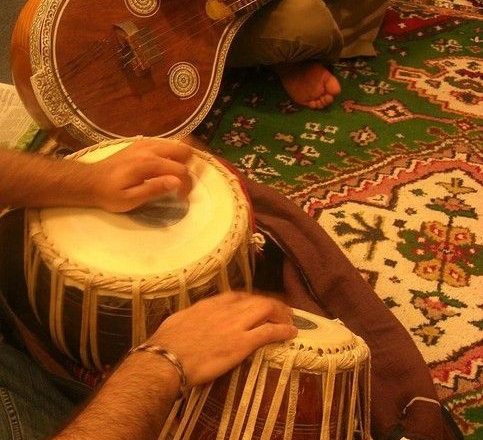
Riyaaz in the Age of Reels
Can Traditional Music Survive the Attention Economy?
There is something almost rebellious about sitting down to practice the same note again and again.
In a world where everything moves at the speed of a scroll, music asks us to slow down.
A raag cannot be understood in fifteen seconds. A voice cannot become expressive overnight. And years of riyaaz cannot be compressed into a trending audio.
Yet, today, some of the first places where people discover music are Instagram Reels, YouTube Shorts and other short-form platforms.
This creates an interesting question for young musicians, especially those learning traditional forms of music:
How do you preserve an art form built on patience in an internet culture built on immediacy?
The world of riyaaz vs. the world of reels
Classical music teaches you to listen before you perform.
You learn a note. Then you learn how that note feels. You learn its relationship with the notes around it. You repeat it until your voice stops thinking about the technique and starts expressing something instinctive.
Riyaaz is slow by nature.
Social media is not.
On social media, the first few seconds can determine whether someone stays or scrolls. A song may be judged before the listener even reaches the first full phrase. Numbers become visible immediately: views, likes, shares, saves, followers.
For an artist, it can sometimes feel like two completely different worlds are demanding your attention.
One says:
Take your time.
The other says:
Give me something interesting before I scroll.
But perhaps these worlds don’t actually have to be enemies.
Traditional doesn’t mean irrelevant
One of the biggest misconceptions about classical music is that younger audiences don’t care about it.
I don’t think that’s necessarily true.
I think sometimes they simply haven’t found their way into it yet.
A person who has never listened to a full classical performance might still stop scrolling when they hear a beautiful alaap. Someone who doesn’t know the technical difference between different raags can still feel something when a voice hits the right note at the right moment.
You don’t always need to understand music academically to experience it emotionally.
And that is where digital platforms can actually become powerful.
The problem isn’t necessarily the art.
Sometimes it’s the entry point.
Can a raag become a reel?
This is where things get complicated.
There is a temptation to make traditional music “social-media friendly” by simplifying it until it becomes almost unrecognisable.
But accessibility shouldn’t have to mean dilution.
A classical musician can create a short video around a particular phrase, explain the emotion behind a raag, experiment with a contemporary arrangement, collaborate with another artist, or simply share a beautiful performance.
The format can change without the soul of the music changing with it.
Think of it this way:
The platform is the stage. It doesn’t have to become the composer.
A reel doesn’t have to replace a full performance.
It can simply be the doorway that makes someone curious enough to seek out the full performance.
And maybe that is one of the most important opportunities traditional musicians have today.
Gen Z isn’t allergic to depth
We often hear that Gen Z has a short attention span.
Maybe.
But I think that’s only half the story.
The same generation that consumes thirty-second videos also spends hours listening to albums, watching live performances, discovering obscure artists and becoming deeply attached to songs that mean something to them.
The problem isn’t necessarily a lack of attention.
It is competition for attention.
There is an unbelievable amount of content available at any given moment. So artists aren’t only competing with other musicians anymore. They’re competing with everything.
Comedy. Fashion. Gaming. Memes. Podcasts. Influencers. News. Friends.
In that environment, being talented is important.
But being discoverable matters too.
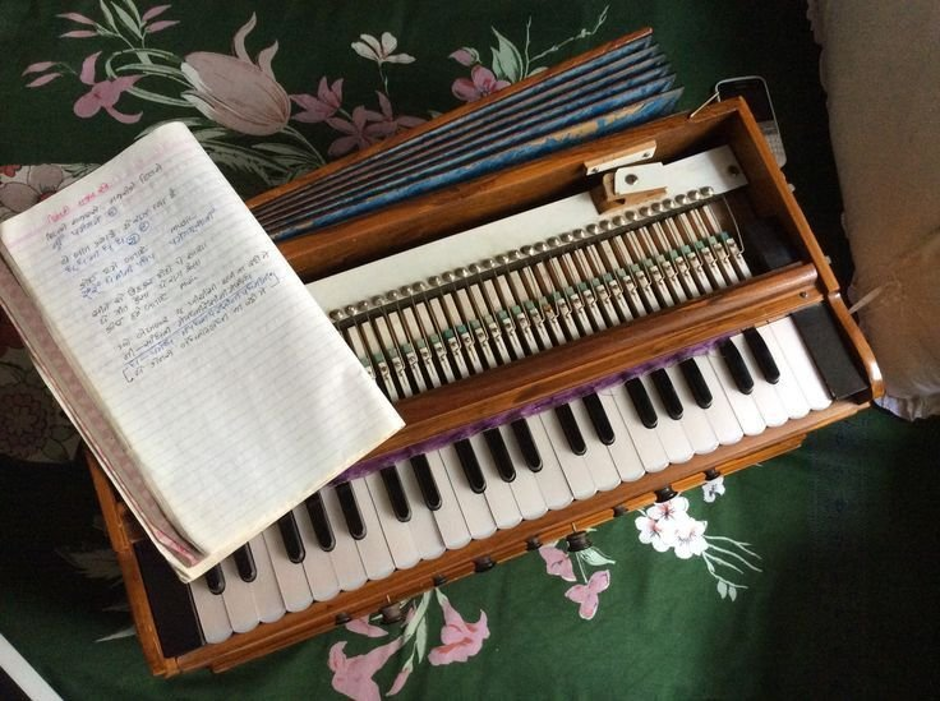
The modern musician is more than a musician
This is probably one of the biggest changes happening in the music industry.
Being a musician used to primarily mean making music.
Today, an independent artist may also have to be their own content creator, social media manager, photographer, marketer, designer, storyteller and sometimes even their own booking agent.
That can feel exhausting.
But it can also be empowering.
You no longer have to wait for someone else to decide whether your art deserves to be seen.
You can build your own audience.
You can tell your own story.
You can experiment.
You can find people who connect with your music even if they are thousands of kilometres away.
The challenge is making sure that the artist doesn’t disappear behind the content.
Don’t let the algorithm become your artistic director
There is a dangerous side to constantly creating for platforms.
You post something.
It performs well.
So you make another version.
That performs even better.
Soon, you begin asking:
What does my audience want?
What will get views?
What sound is trending?
What should I post next?
And somewhere along the way, another question can become quieter:
What do I actually want to create?
For artists, that question matters.
An algorithm can tell you what people clicked on.
It cannot tell you what your music means to you.
There is a difference between creating something because it genuinely excites you and creating something because you have learned how to maximise engagement.
The best place, perhaps, is somewhere in between.
Use the algorithm.
Don’t belong to it.
Tradition needs evolution, not abandonment
Music has always evolved.
Genres have crossed borders. Instruments have been reimagined. Classical compositions have inspired contemporary music. Folk traditions have travelled from one generation to another by constantly adapting to their surroundings.
So perhaps the conversation shouldn’t be:
Traditional music or modern music?
Maybe it should be:
How can traditional music exist beautifully in a modern world?
There is room for the concert hall and the phone screen.
For the long-form performance and the thirty-second clip.
For centuries-old compositions and completely new interpretations.
For riyaaz in a quiet room and a performance shared with thousands of strangers online.
These things don’t necessarily cancel each other out.
They can coexist.
So, can traditional music survive the attention economy?
I think it can.
But survival shouldn’t be the goal.
Relevance should not mean becoming something you’re not.
The goal should be to create new ways for people to discover what has always been there.
Maybe someone finds a fifteen-second clip today and listens to a full performance tomorrow.
Maybe a reel introduces someone to a raag they had never heard before.
Maybe a young musician finds confidence in sharing a tradition that once felt distant from their generation.
And maybe the most beautiful part is that the music doesn’t have to become less traditional to reach them.
It simply needs a new doorway.
Because while the internet may have changed the way we discover music, it hasn’t changed the reason we fall in love with it.
We still listen when we want to feel something.
We still repeat songs that become memories.
We still close our eyes when a particular note reaches somewhere words cannot.
And perhaps that is the thing worth remembering in the age of endless scrolling:
Some music deserves to be discovered quickly.
But it deserves to be experienced slowly.